Loading...
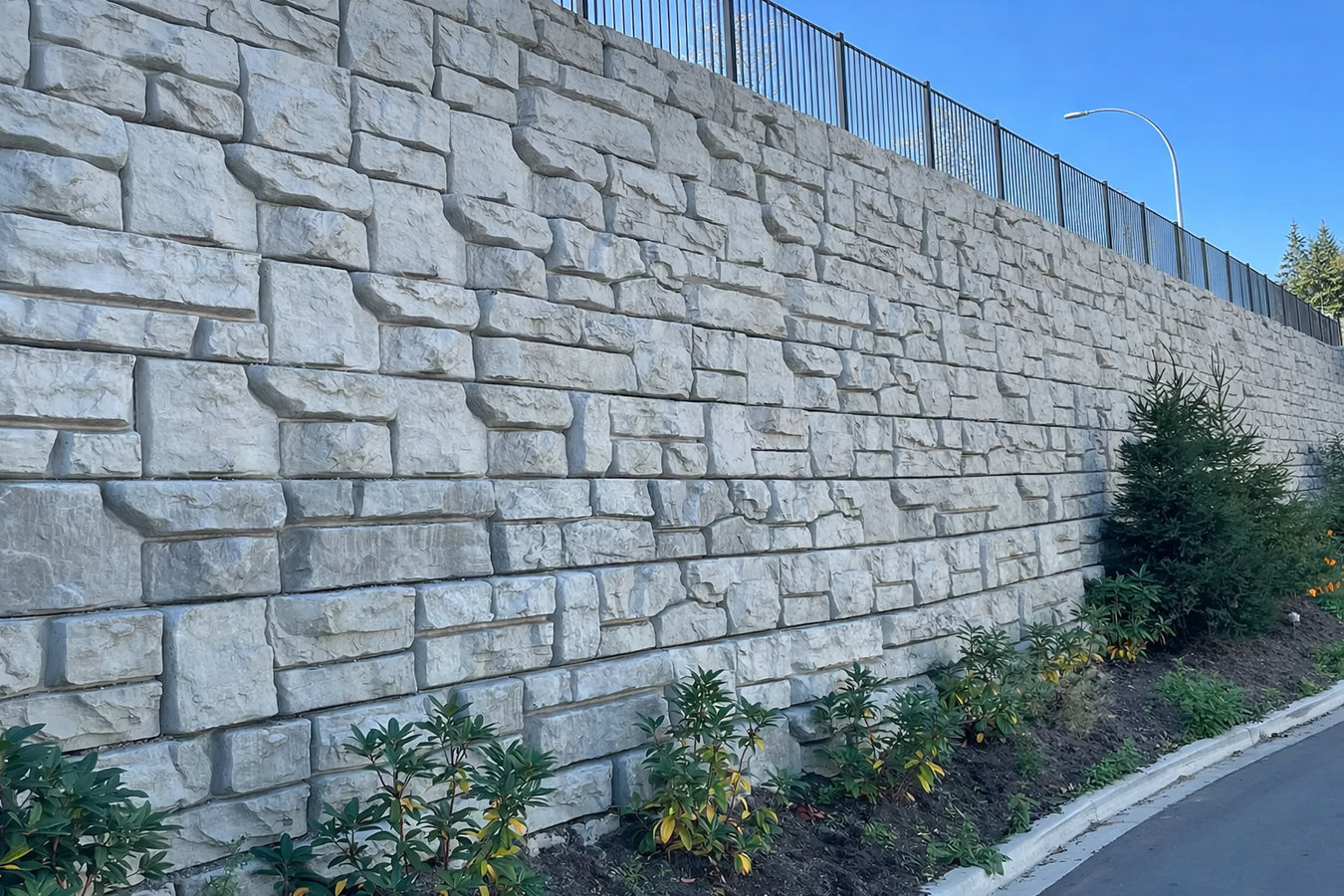
If soil keeps washing away every rainy season, a properly built concrete retaining wall gives it a permanent edge to hold against - and keeps your yard working for you.
Concrete retaining walls in West Melbourne hold back soil that would otherwise erode or slump - especially during Brevard County storms - most residential walls are designed and poured within one to three days of active work, with full drainage installed behind the wall before backfilling begins.
West Melbourne homeowners deal with sandy soil that shifts fast after heavy rain, and a slope that looks fine in April can be actively eroding by August. Concrete retaining walls stop that cycle permanently by giving the soil a solid edge it cannot move past. Many of the projects we handle also pair with concrete floor installation when homeowners are flattening a grade to build out a patio or utility space.
If your yard has an uneven grade, a failing timber wall, or erosion showing up after every rainstorm, the right move is a wall built to last - not a patch job that buys you one more season.
If bare patches, exposed roots, or a trail of dirt appear across your yard or driveway after a summer storm, your soil is eroding. West Melbourne storms can drop several inches in a short time, and that kind of erosion accelerates fast. Left alone, it can undermine nearby landscaping, driveways, and your foundation.
A wall that has started to tilt forward, shows horizontal cracks running across its face, or has gaps at the base is under more pressure than it can handle. This is a safety concern, not just cosmetic - a failing wall can collapse suddenly after a heavy rain. If you see these signs, get an assessment before the next rainy season.
A steep slope in your yard is losing soil every time it rains. Terracing it with a retaining wall turns unusable hillside into flat, functional space. Many West Melbourne homeowners with lots that back up to drainage swales or retention ponds deal with exactly this situation.
If water consistently collects against your house after a storm, the grade of your yard may be directing runoff toward the foundation instead of away from it. A retaining wall combined with regrading can redirect that flow and protect your foundation from long-term water damage - a real concern during Brevard County wet seasons.
We build poured concrete retaining walls for West Melbourne residential and small commercial properties, handling everything from footing excavation to final backfill. Every wall includes steel rebar reinforcement inside the concrete, a gravel drainage layer behind it, and perforated pipe where the slope and soil conditions call for it. We also manage permit coordination with Brevard County and the City of West Melbourne, so you are not navigating that process alone. For properties that need both wall work and new surfaces, concrete footings can be poured as part of the same project scope.
We work on walls of varying heights, from low garden-bed borders up to taller structural walls that require engineered drawings. The wall type we recommend depends on the height you need, the soil conditions on your property, and any HOA or setback requirements that apply. We walk through all of that with you before any work is scheduled.
Best for homeowners who need a long-lasting structural wall with minimal maintenance and maximum strength against soil and water pressure.
A good fit for homeowners who want a modular look, or where site access limits the equipment needed for a full poured wall.
For properties where water management behind the wall is the primary concern, and proper drainage is the difference between a 50-year wall and a 5-year problem.
Ideal for homeowners who want the full permit pulled, inspected, and closed out without having to manage the county or city process themselves.
West Melbourne sits on sandy, low-lying soil that drains quickly in normal conditions but shifts and erodes faster than clay-heavy soils when heavy rain hits. Brevard County averages around 50 inches of rain per year, with the most intense storms concentrated between June and September - the same window as hurricane season. That combination means a slope without a proper retaining wall is under real stress every summer, and what looks like minor erosion in May can be a significant problem by October. Homeowners near Melbourne face the same soil and drainage conditions, making retaining walls a common project throughout the corridor.
Permit requirements in this area add a layer of planning that not every contractor communicates upfront. Walls above four feet typically require a permit and, in many cases, engineered drawings before Brevard County will approve the work. For homeowners in Palm Bay and the surrounding communities, the timeline from first contact to a completed, inspected wall is usually four to eight weeks when permits are involved. Knowing that upfront lets you plan ahead, especially if you are trying to get the work done before summer storms arrive.
We reply within one business day. A site visit follows to check the grade, soil, and drainage before we give you a number - photos help, but they cannot replace seeing the slope in person.
You receive a written estimate covering labor, materials, drainage, and any permit fees. We explain what the permit process looks like in West Melbourne and how long approval typically takes, so the timeline is clear before you sign.
The crew excavates the area, sets forms, places rebar, and pours the concrete. Most residential walls take one day of active pouring. The forms stay in while the concrete sets.
Once forms are off, gravel drainage goes in behind the wall before backfill. If a permit was pulled, we coordinate the county inspection - you do not need to chase it. Final cleanup follows sign-off.
No obligation. We visit your property, walk you through exactly what we recommend, and give you a written quote before any work is scheduled.
(321) 294-0430We install gravel backfill and drainage pipe behind every wall we pour, because skipping that step is the number-one reason walls fail in Florida. A wall without drainage is a wall that is already failing in slow motion.
We pull the permit, schedule the county or city inspection, and coordinate sign-off as part of the job. You get a wall that is on record as a legal, inspected structure - which matters if you ever sell your home.
We build walls on West Melbourne properties regularly and know how to size footings for the sandy, shifting soil common throughout this area. A footing that reaches stable ground is what keeps the wall plumb for decades, not just seasons.
Every poured wall we build includes steel rebar inside the concrete. You cannot see it once the wall is finished, which is exactly why it matters - it keeps the concrete from cracking under the weight of saturated soil after a heavy storm. See concrete reinforcement standards at the American Concrete Institute.
Every retaining wall project we take on combines local soil knowledge, proper drainage, and permit compliance from the start. That combination is what makes the difference between a wall that stands straight after 10 hurricane seasons and one that leans before the first rainy season ends.
Once your grade is leveled and the wall is in, we pour a flat, stable concrete floor for garages, patios, and utility spaces.
Learn MoreDeep footings that anchor walls and structures to stable ground, sized for Brevard County soil conditions.
Learn MoreSpring project slots fill fast - reach out now to get on the calendar before the rainy season arrives.