Loading...
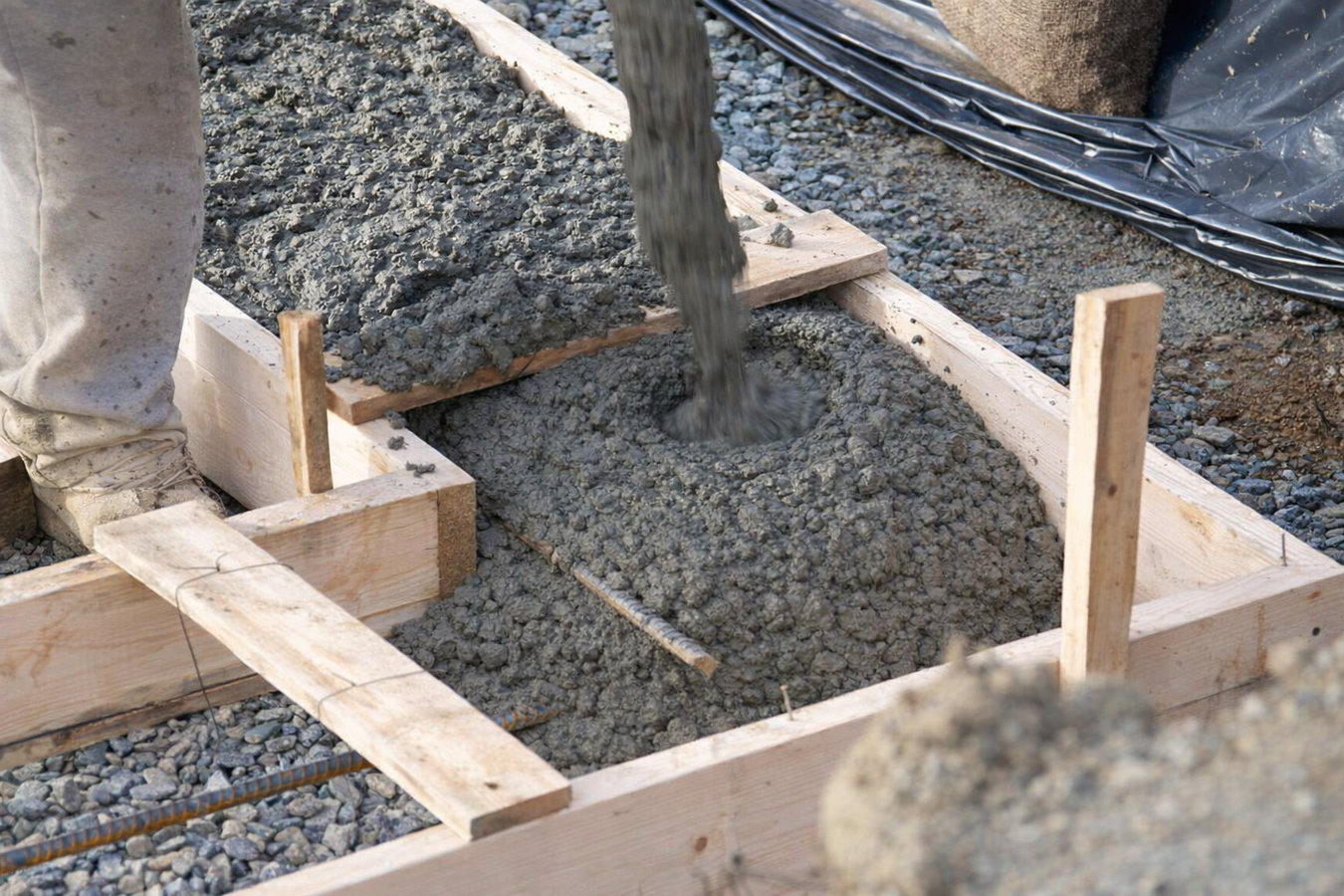
Rebar-reinforced footings sized for Brevard County's sandy soil and wind-load requirements - fully permitted, inspected, and ready for framing.
Concrete footings in West Melbourne are the structural base that holds a deck, room addition, screened enclosure, or detached garage in place - they spread the weight of the structure across stable ground so nothing shifts, sinks, or pulls away from the house over time, and most residential footing jobs take one to three days of active work plus several days of curing before framing can begin.
Homeowners in West Melbourne need footings anytime they are adding a structure that transfers load into the ground - a new deck, a pergola, a carport, a screened lanai, or a full addition. The local factor that makes footing work here different from other parts of the country is Brevard County's sandy soil. Loose sand does not grip the way denser soil does, so footings need to reach stable ground and need to be sized correctly for the load above. Contractors who have not worked in this soil type tend to underestimate what is needed - and the result is a structure that looks fine at first but starts leaning or settling within a few years. Many footing projects here connect to larger structural work, and when there is movement or damage already visible, homeowners sometimes also ask us about foundation raising to correct existing settling before new work is built on top.
Brevard County requires a permit for almost all footing work tied to a structure. That is not a burden - it means a licensed inspector will check the footing before it is buried, which is a protection worth having. We handle the permit process on every job.
If you are planning a new deck, screened enclosure, room addition, pergola, or detached garage, you almost certainly need new footings before any framing begins. These structures transfer their weight directly into the ground, and without a proper footing they can shift, lean, or pull away from the house over time. This applies even to smaller projects that feel minor - if it is attached to the ground or your home, footings are likely required.
If you notice a gap forming between your deck or porch and the main house, or if posts or columns look like they are tilting, the footing underneath may have shifted or settled. In West Melbourne's sandy soil, this kind of movement is more common than homeowners expect - the ground simply does not grip the way denser soils do. A contractor can assess whether the existing footing has failed or whether it was undersized to begin with.
Horizontal or diagonal cracks near the base of a block wall, column, or porch support are often a sign that the footing beneath it is moving or deteriorating. In coastal Brevard County, moisture in the soil can work its way under footings over time, especially after heavy rain seasons. If you see cracks that are widening or that were not there a year ago, it is worth having a concrete contractor assess the situation before the problem gets worse.
After a hurricane or tropical storm, it is tempting to rebuild quickly and match what was there before. But if the original structure was built before current wind-load standards took effect, the old footings may not meet today's requirements. West Melbourne's location in a coastal county means replacement structures must meet current code - and that often means new or upgraded footings, not just new framing on top of what was already there.
We pour concrete footings for residential structures throughout West Melbourne and Brevard County - decks, screened enclosures, room additions, pergolas, carports, and detached garages. Every footing we install is reinforced with steel rebar, sized based on what we find in the ground at your specific property, and poured only after the county inspector has verified the depth and dimensions are correct. That inspection step - which happens before any concrete is placed - is the built-in check that protects you if anything is ever questioned later. We also confirm that all underground utilities are marked before we break ground, which is required by Florida law. When the scope includes a larger structural project, we coordinate footing work with related tasks like foundation installation so everything is sequenced correctly and no phase waits on another.
The permit and inspection process in Brevard County is one we navigate regularly. We submit the application, respond to any county questions, coordinate the pre-pour inspection, and follow up on the final closeout so you have clean documentation. For homeowners who have already discovered unpermitted footing work during a home purchase or permit search, we can assess what is there and advise on how to bring it into compliance. We also handle situations where existing footings need to be replaced entirely because the original work did not meet current wind-load requirements - a common issue with structures built before Florida updated its coastal building standards. When existing footings are sound but the structure above them has settled, we evaluate whether foundation raising is a better solution than starting over from scratch.
Best for homeowners adding a deck, enclosure, pergola, or other structure where no footing currently exists.
Ideal for situations where existing footings have failed, settled, or do not meet current Brevard County wind-load requirements.
For homeowners who want the county permit handled, the pre-pour inspection scheduled, and the paperwork closed out without managing the process themselves.
For properties where a hurricane or tropical storm damaged or destroyed a structure that needs to be rebuilt to current coastal wind-load standards.
Two conditions in Brevard County shape every footing project here. The first is sandy soil with low bearing capacity. Much of West Melbourne and the surrounding coastal plain sits on loose sand that compresses under load far more readily than the clay-based soils common in other parts of the country. Footings poured into inadequately assessed sandy soil can shift or sink over time - sometimes within a few years of construction. Experienced local contractors know to dig past the loose surface layer to find stable ground, and they know that what they find can vary significantly from one part of a property to another. That variability is one reason a site visit before quoting is not optional - it is how a realistic, accurate estimate gets built. Homeowners in Rockledge and other Brevard County communities share the same soil conditions and the same need for thorough pre-pour assessment.
The second condition is Brevard County's location in a Florida coastal wind zone. Structures here must be built to withstand high-wind events, and that requirement extends to the footing level - the footing must be sized and anchored to carry the wind-load of whatever is built on top. Florida's building code enforces this through the permit and inspection process, which requires a county inspector to verify the footing dimensions and reinforcement before any concrete is poured. Homeowners in Titusville face the same wind-zone requirements and the same inspection protocol. The inspection step might feel like a delay, but it is the step that confirms your investment is built to last. We manage the entire process so you are not tracking down inspectors or waiting on callbacks from the permit office.
We visit the property, check the ground conditions and access for equipment, and assess whether anything - soft soil, standing water, underground utilities - will affect how we approach the dig. You receive a written estimate that covers scope, timeline, and cost. Replies within one business day of your initial contact.
We submit the permit application to Brevard County before any work begins. We also confirm that underground utilities - water, electrical, irrigation - are marked through Florida's 811 program before any digging starts. This step is required by law and protects your property.
The crew digs to the required depth, sets up forms, and places steel reinforcement inside. A county inspector visits before the pour to verify depth, size, and rebar - this inspection is what protects you if anything is ever questioned later. The pour happens after the inspector signs off.
Concrete needs several days to reach working strength - in West Melbourne's heat, we take steps to keep it from drying out too fast, which can weaken it. We let you know when the footing is ready for framing and confirm the final inspection has been closed out with the county.
We visit the site, check the soil conditions, and give you a written quote that covers permit fees, reinforcement, and everything else up front. No surprises.
(321) 294-0430We visit the property before quoting, check what is actually in the ground, and size the footing based on what we find - not a standard depth that ignores local soil conditions. Brevard County's sandy coastal soil varies across neighborhoods, and the difference between a footing that holds and one that settles starts at the assessment step. We do not skip it.
West Melbourne sits in a Florida coastal wind zone, and every structure we install footings for is designed to handle those loads from the ground up. We build to current Brevard County requirements on every job - not to whatever the original structure was built to years ago. The American Concrete Institute sets the structural concrete standards we follow for reinforcement and mix specifications.
We pull every permit, manage the paperwork, coordinate the county pre-pour inspection, and get the final closeout documented. You never need to call the Brevard County Building Services office or track down an inspector. Permitted footing work with a clean inspection record is what protects your home value when you sell - and we have been navigating this process in this county since 2020.
Florida's summer rainy season - June through September - can delay concrete pours and slow permit processing as contractor volume picks up before the dry season. We schedule your project around West Melbourne's weather patterns and coordinate the permit timeline so the two line up. A realistic timeline given upfront is better than one that falls apart in July because no one planned for the rain.
Footings are the part of the job no one sees once it is done - which is exactly why doing them right matters so much. A footing built correctly in West Melbourne's conditions will still be holding its structure steady in 50 years. One that cut corners on soil assessment or skipped the permit inspection will make its problems known long before that.
Corrects existing settling or sinking in structures where the footing below has shifted - often the right first step before adding new footings on an existing property.
Learn MoreFull slab and foundation pours for new construction, additions, and outbuildings - a natural next step when footing work is part of a larger build.
Learn MorePermit timelines add weeks to any footing project - reach out now to get your estimate and start the process before summer slows everything down.